
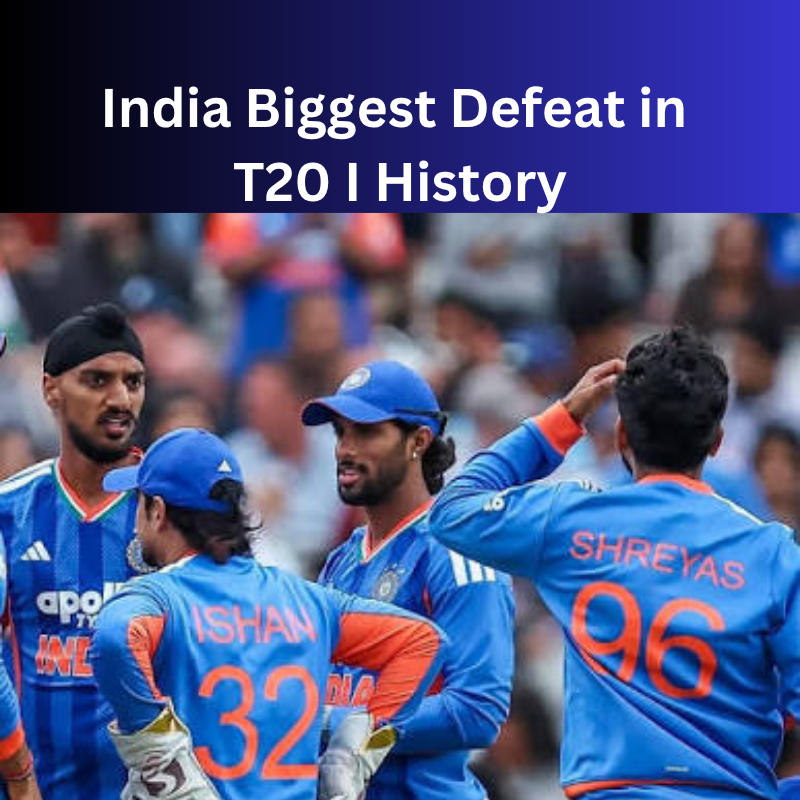
India’s Heaviest T20 International Defeat Against England
India vs England t20 I – 07-07-2026
Cricket is a sport with uncertainties; however there are certain days when reality hits hard. One such day would undoubtedly be July 7, 2026, which will go down as the darkest day in the history of Indian T20 International cricket. Going into the 3rd T20I match against England at Trent Bridge, Nottingham, the Indians were set to hunt for the target of 202. Unfortunately for them on that day, the Indian batting unit surrendered miserably making only 76 runs in response to England’s total.
This defeat has been recorded as India’s biggest defeat in T20I cricket in terms of runs. Captain Shreyas Iyer was straight forward while giving his comments on the match and termed it as a performance that was unacceptable and horrible. Currently, England leads the series 2-0 and it’s important now to analyse the team’s performance and see what mistakes led them to this big defeat.
The Pre-Match Setup: A Recipe for Disaster?
The captain of England, Jos Buttler was adamant about batting first after winning the toss on the pitch at Trent Bridge because of its reputation for good bounce and small boundaries. India made some changes to the team keeping in mind the ICC missions ahead and to test the bench strength of the players. However, what was meant to be a test of depth turned into an exposure of systemic vulnerabilities.
From the first over, England’s intent was clear. They targeted India’s lack of early-swing bowlers and established a momentum that India could never truly break.
1. Powerplay Dismantling: The Phil Salt Carnage
The initial turning point in India’s poor performance happened in the first 6 overs of the match. Phil Salt has been performing exceptionally well, so he gave India a tough time in the initial overs of the match.
Tested the Bowling Combination: India set up an opening bowling combination that was on the weaker side. Without the discipline and swing of seasoned campaigners, the lengths were either too short or too full.
The Stat That Hurts: England raced to 68/0 in the Powerplay. Phil Salt’s blistering 70 off just 34 balls set a platform that automatically put India on the defensive.
When your premier bowlers go for over 11 runs an over in the restriction period on a good batting track, the captain is forced to defensive fields early on, which completely eliminates the chance of taking wickets in the middle overs.
2. Death Overs Breakdown: Donating 20-30 Extra Runs
Although the opening was not going well for India, their spinners during the middle stage of the innings made a minor comeback by claiming three wickets in quick successions and preventing England’s march in the 13th over. At 135/4 in the 14th over, India had hopes off keeping England to around 175-180 runs in the innings.
However, the final four overs were an absolute catastrophe:
Predictable Tactics: Indian pacers relied heavily on length balls and missed yorkers, which easily traveled over the short boundaries.
The Tail Wagged: England’s lower-middle order, led by quick cameos from Sam Curran and Jamie Smith, plundered 52 runs in the last 4 overs, pushing the total to a massive 201/7.
Psychologically, chasing 175 is a different ball game; chasing 202 requires a flawless start—something India was nowhere near achieving.
3. The Structural Flaw: An Unstable Top Order
Chasing a target of 10-plus runs per over requires a solid foundation. Instead, the Indian top order showed zero adaptability.
With standard opening partnerships failing in recent games, the pressure was on the makeshift opening duo. However, instead of playing out the first few balls to understand the pace of the pitch, the batters played highly high-risk shots against moving deliveries.
By the end of the 3rd over, India had lost both openers for single-digit scores. When you are 12/2 chasing 202, the game is effectively 70% lost. The lack of a defined anchor role in the top three meant that there was no one to stop the bleeding.
4. Technical Deficiencies Against High-Quality Pace
England’s bowling attack, led by Jofra Archer and Mark Wood, didn’t just bowl fast—they bowled smart. They exploited a well-known technical flaw in the current crop of Indian batsmen: the inability to handle high-pace hard lengths and short-pitched bowling.
The Short-Ball Trap: Mark Wood’s extra pace clocked consistently above 145 km/h. He continuously hit the deck hard, extraction uncomfortable bounce. Indian batsmen, hurried by the pace, repeatedly mistimed pull shots or pushed at deliveries outside off-stick with hard hands.
No Footwork: Due to the fear of the short ball, the batters’ footwork became static. This made them sitting ducks for Jofra Archer’s lethal incoming deliveries and slower-ball variations.
5. Panic and the “Domino Effect” in the Middle Order
Perhaps the most disappointing aspect of the 76-run surrender was the complete lack of fight. T20 cricket demands aggression, but it also demands situational awareness.
Once the top order fell, the middle order consisting of youngsters and transition players panicked. Instead of building a small partnership to take the game deep, every incoming batsman tried to hit their way out of trouble.
The Turning Point: Captain Shreyas Iyer’s dismissal trying to clear long-on off a ball that wasn’t there to be hit triggered a procession.
The Collapse: India went from 35/3 to 52/7 in a matter of 18 balls. It looked less like an international cricket match and more like a club-level batting collapse. There was no communication between partners, and the shot selection was amateurish at best.
6. The Spin Vacuum: Failure to Read the Surface
When England bowled, their spinners Adil Rashid and Rehan Ahmed got considerable grip and turn from the surface. They bowled slower through the air, forcing Indian batsmen to generate their own power—something they failed to do.
On the contrary, Indian spin bowlers failed to bowl with the right speed and did so too flatly in comparison to their English counterparts. This is the reason behind the easy batting performed by the English side where they were able to take advantage of the speed of the Indian bowlers to score runs and make boundaries. The inability of the Indian team to judge the speed and pitch conditions in order to alter their speed of bowling indicated some kind of lack in the preparation and planning by Indian team management.
Post-Match Fallout: What the Experts and Captain Said
The reaction across the cricketing world has been brutal. Social media has been flooded with criticism from former players.
Shreyas Iyer (Indian Captain): “There are no excuses for this performance. We failed in all three departments. To get bowled out for 76 in T20 cricket is atrocious and unacceptable. We need to look into the mirror and fix our approach immediately.”
Cricket experts have been arguing that it is time for a re-visit of India’s aggressive approach to batting. Playing cricket in a fearless manner is different from reckless cricket, and yesterday, India got its definition of fearless wrong.
The Road Ahead: How India Can Recover
The 125-run defeat serves as a substantial eye-opener. India has to be on their toes as they cannot allow any further mishap if they are to save the series with three matches left to play. Following are three changes India should make right away:
- Fix the Opening Combination: India needs a settled opening pair that balances caution with aggression. Constantly shuffling the top order is creating insecurity among the players.
- Bring Back Experience: While grooming youngsters is important, completely removing the core experience against a world-class side like England in their home conditions is a recipe for disaster.
- Flexible Batting Approach: The coaching staff needs to drum into the players that if 2 or 3 wickets fall early, the team needs to reset, aim for a respectable 140-150, rather than getting bowled out for double digits trying to chase 200 in 10 overs.
Conclusion:
Every great team faces a nadir, a lowest point from which they must rebuild. For India’s T20 structure, the 76-all-out at Trent Bridge is that rock bottom. It exposed tactical rigidity, technical flaws against raw pace, and a fragile psychological temperament under pressure.
However, history shows that Indian cricket often bounces back strongest when pushed against the wall. Whether this young squad can learn from this historic embarrassment or succumb to the pressure will be answered in the 4th T20I.
Leave a Reply